


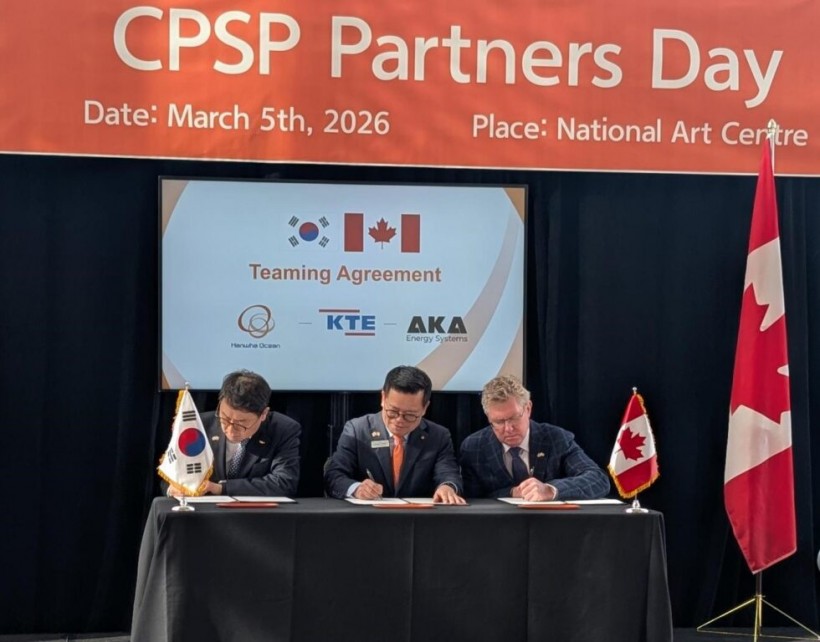
Montague, P.E.I.-based AKA Energy Systems has signed a teaming agreement with South Korean shipbuilder Hanwha Ocean Co. and technology firm KTE Co.to collaborate on Canada’s Canadian Patrol Submarine Project.
The tri-party agreement was formalized on March 5 during Hanwha Ocean’s CPSP Partners’ Day event in Ottawa. It establishes a framework for cooperation on submarine power distribution, electrical and control systems, and propulsion technologies.
Under the arrangement, AKA Energy Systems will work with the two South Korean companies to integrate Canadian-developed power and propulsion systems into submarine and naval platform programs. The agreement also aims to position Canadian technology within international shipbuilding supply chains.
“This teaming agreement is a significant milestone for AKA Energy Systems and for Atlantic Canada,” said AKA Energy Systems CEO Jason Aspin in a statement. “By partnering with Hanwha Ocean and KTE, we are bringing Canadian power and control system expertise into an international naval program, creating high-value engineering jobs, and building export pathways for Canadian technology into global shipbuilding projects.“
Before the signing in Ottawa, representatives from Hanwha Ocean and KTE visited AKA’s headquarters and manufacturing campus in Montague. The facility includes electrical assembly, mechanical fabrication and testing operations used for developing hybrid power and microgrid systems.
Further collaboration is planned through reciprocal visits, including a trip by AKA representatives to South Korea to tour Hanwha Ocean’s shipyard and KTE’s facilities. The companies plan to discuss technology integration and the development of next-generation electrical and control systems for submarine platforms.
AKA said participation in the submarine program could lead to about 200 new jobs in Atlantic Canada across engineering, manufacturing, systems integration and testing roles.
The partnership is intended to support Canada’s defence procurement policy introduced earlier this year, which encourages greater participation by domestic firms in military projects and aims to expand defence-related exports.