


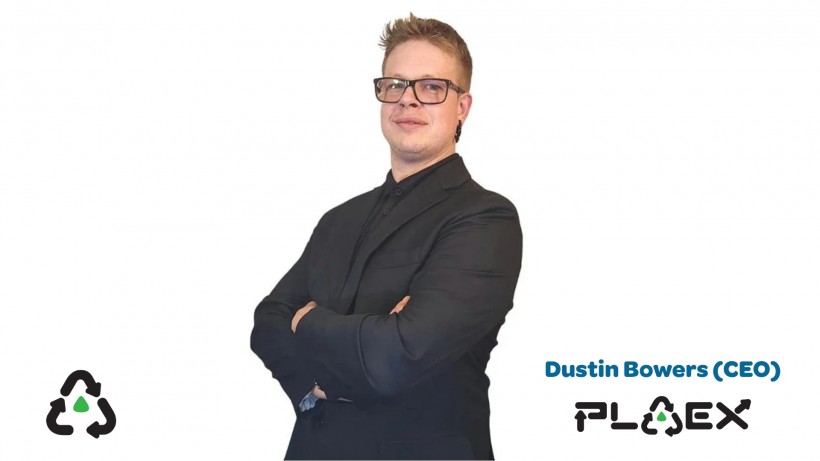
PLAEX Building Systems, which converts waste into modular building blocks, is working on a $3 million raise as it prepares for a launch this summer.
The Moncton-area company has secured $1 million to date and is seeking an additional $2 million in equity financing to put it in a position to begin delivering its products to customers in the coming months. The funding will support the transition from research and development into early commercial production.
Founded by CEO Dustin Bowers, PLAEX produces modular, interlocking construction blocks made from more than 90 percent recycled materials. The company’s proprietary composite, known as PLAEX-crete, incorporates difficult-to-recycle waste streams, including agricultural, marine and industrial plastics, along with construction aggregate waste.
The resulting bricks are designed to lock together without mortar or cutting, reducing labour requirements and construction time. According to the company, its Brick&Panel system can lower total project costs by up to 35 percent and allow structures to be assembled up to three times faster than conventional methods, in part because it eliminates curing time.
Bowers, who spent roughly 18 years in construction as a project manager and later as the owner of a renovation company, said the idea emerged from firsthand exposure to industry waste. He said the volume of discarded material from job sites – particularly plastic – prompted him to look for alternatives to landfill disposal.
“We’re one of the only companies in the world taking waste and turning it into a building material that outdoes concrete on almost every metric,” Bowers said in an interview, adding that the technology has been validated through its development phase.
The company completed its research and development stage and now operates a pilot facility. In addition to manufacturing its own products, PLAEX plans to pursue licensing agreements, positioning its intellectual property as a scalable solution for other markets.
The modular system is aimed at a range of low-rise applications, including retaining walls, flood barriers, sheds and foundations. The company is also targeting residential construction, with full wall systems currently pending certification. Bowers said the technology could address both environmental and housing challenges by enabling faster, lower-cost homebuilding.
He said a typical 1,000- to 1,500-square-foot home could be assembled in about one week using PLAEX blocks, compared with months for traditional construction methods.
PLAEX has also developed a demonstration home in collaboration with Hungarian architect Zsuzsanna Tóth-Jeffery. The project is intended to showcase the design flexibility of the system as well as its structural capabilities. Bowers said the collaboration highlights how sustainability-focused materials can be used without sacrificing aesthetics.
Market interest has been driven in part by the company’s online presence. PLAEX reports generating approximately 38 million views across its social media channels, resulting in about 20,000 sales leads worldwide. Of those, more than 1,000 are considered qualified leads, according to the company.
In addition to construction materials, PLAEX has introduced smaller retail products, including modular hockey rinks and garden bed kits designed for consumer assembly.
The company received the InnovateNB award for Most Innovative Product or Service in 2023, providing early external validation of its approach.
Bowers said the immediate focus is completing the current fundraising round and scaling production capacity to meet anticipated demand.
“We have the opportunity to get into the market this summer,” he said.